

Remodel Technology Planning
Smart Home Remodel Planning
in Western Montana
Remodels come with real technology challenges: finished walls, older wiring, weak Wi-Fi, scattered devices, limited equipment space, and design details that are already being decided. Automated Living helps homeowners, contractors, designers, and commercial project teams work through those constraints with thoughtful planning, clean installation, and long-term support.
Unlike new construction, a remodel often starts with conditions that already exist. There may be old cabling behind the walls, rooms that were never wired for modern networking, AV equipment tucked into the wrong places, cameras with limited sightlines, or lighting controls that no longer match how the space is being used. Automated Living helps identify what can be reused, what should be upgraded, and what needs to be planned before the remodel moves too far forward.
Remodels Are Where Smart Planning Matters Most
A remodel can improve the way a home or business looks, but the technology behind the space has to be planned with the existing structure in mind. Finished walls, attic or crawlspace access, cabinetry, electrical changes, ceiling conditions, and existing wiring all affect what is possible and what should be prioritized.
Automated Living’s role is to help turn those limitations into a workable plan. That may mean finding a cleaner wiring path, improving Wi-Fi coverage without overbuilding the system, relocating equipment before cabinetry is finalized, preparing for future expansion, or integrating new Control4, AV, lighting, security, and networking systems into a property that was not originally designed around them.
The Remodel Pain Points Automated Living Helps Solve
Remodel technology planning is not just about adding more devices. It is about solving the problems that often appear when older homes, finished spaces, additions, basements, outdoor areas, or commercial interiors are updated without a clear plan for the systems that support them.
Finished Walls & Limited Access
Existing walls, ceilings, floors, and finishes can restrict wiring routes. Early planning helps identify the best available access before the project reaches a point where clean options become more limited.
Older or Unknown Wiring
Many remodels involve cabling that is outdated, poorly labeled, incomplete, or not suited for current networking, audio/video, security, or control needs. Automated Living can evaluate what is usable and where new infrastructure is needed.
Weak Wi-Fi & Network Gaps
Remodeled areas often expose existing network problems, especially in larger homes, thick-walled spaces, home offices, detached structures, and properties with heavy streaming or remote-work demands.
Scattered Apps, Remotes & Controls
A remodel is a practical time to simplify how the space is controlled, replacing disconnected devices with a more intuitive experience for lighting, audio, video, climate, security, shades, and access.
Awkward Media & Equipment Locations
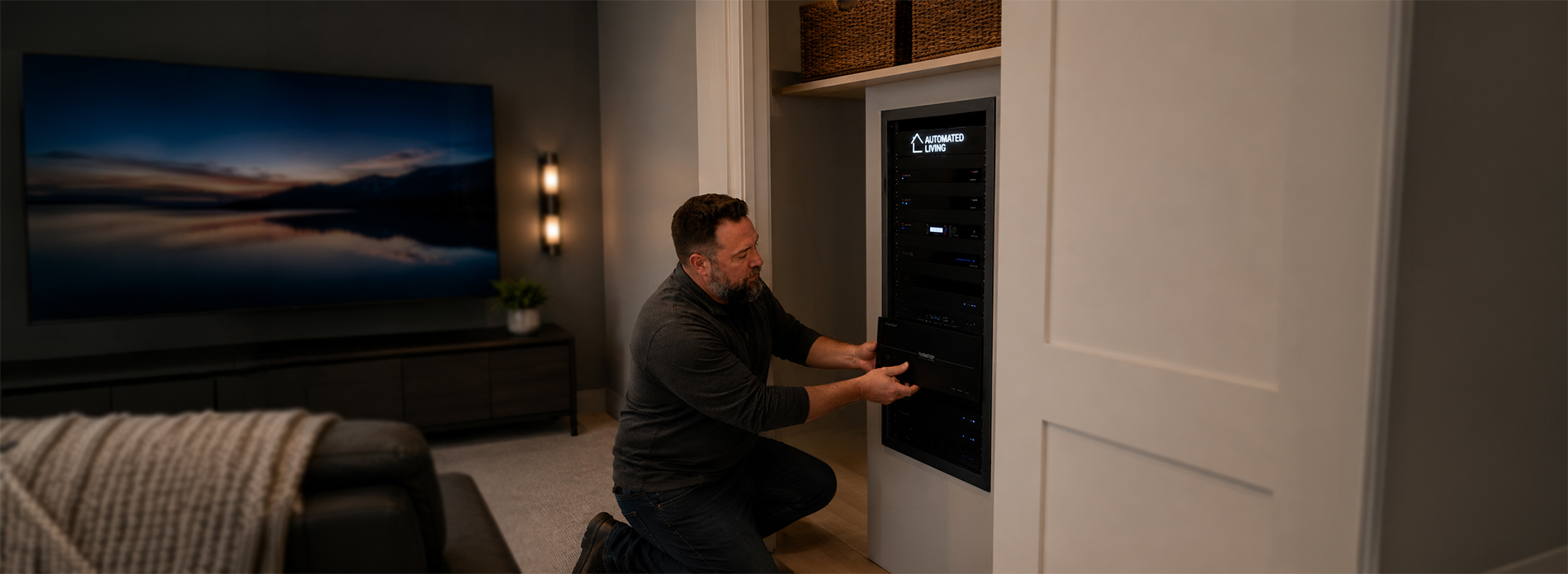
TVs, speakers, sound systems, racks, cabinets, and media equipment need to be planned before finished details are locked in. This helps avoid visible cabling, crowded cabinets, poor ventilation, or inconvenient service access.
Security & Camera Blind Spots
Existing homes and businesses may not have ideal camera, door station, gate, or access-control locations. Remodel timing can make it easier to improve visibility, wiring, device placement, and remote access.
So-Called Remodel Limitations Are Often Planning Problems
Not every remodel gives the same access as a new build, but that does not mean the technology plan has to feel compromised. The right approach depends on the structure, the schedule, the available access, and the client’s long-term priorities.
Common Remodel Concern
- “The walls are already finished.”
- “We do not know what wiring is in place.”
- “The Wi-Fi has never worked well in this part of the home.”
- “The media wall is changing, but we do not want visible cabling.”
- “We only want to remodel one area now, but may expand later.”
- “The designer does not want technology to distract from the finished space.”
How Early Technology Planning Helps
- Identify access points before finish work closes them off.
- Evaluate existing infrastructure before relying on it.
- Plan access point locations and wired backbones more intentionally.
- Coordinate display, speaker, power, cabling, and equipment locations early.
- Prepare pathways, rack space, and control options for future phases.
- Keep visible technology cleaner, simpler, and better integrated with the design.
Where Automated Living Fits Into the Remodel Process
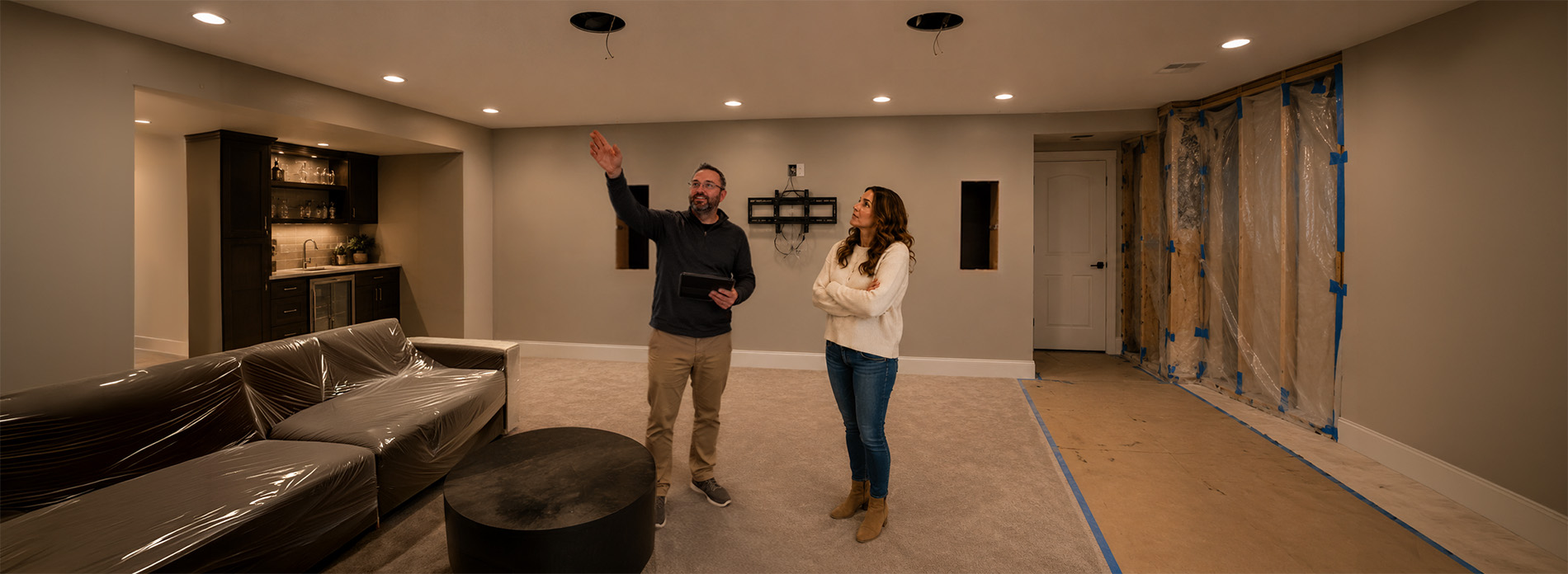
The best time to involve Automated Living is from the start — or before the remodel details are fully committed. Even a short planning conversation can help protect important options before walls close, cabinetry is ordered, electrical work is completed, or final device locations are assumed.
1. Before Design Details Are Final
Review the project scope, affected rooms, existing technology issues, planned finishes, and long-term goals before layouts become difficult to change.
2. Before Demolition or Access Work
Identify where wiring, equipment, speakers, cameras, displays, touchscreens, and access points may be easier to place while areas are opened up.
3. Before Electrical & Cabinetry Decisions
Coordinate power, low-voltage pathways, equipment ventilation, rack locations, TV backing, keypad placement, and cabinet space before those decisions are locked in.
4. During Rough-In or Open-Wall Stages
Install or prepare the infrastructure needed for reliable Wi-Fi, Control4, AV, security, lighting control, cameras, and future system expansion.
5. Before Finish Work
Confirm visible device locations, speaker openings, display placement, control points, and service access before paint, trim, cabinetry, and finish surfaces are complete.
6. After the Space Is Ready
Install equipment, program controls, tune the user experience, review operation, and provide ongoing support after the remodel is complete.
What Can Be Improved During a Remodel?
The right remodel technology plan depends on the property and the project. Automated Living helps prioritize the systems that will have the greatest impact on reliability, comfort, security, entertainment, and daily use.
Whole-Home Wi-Fi & Networking
Improve coverage, wired infrastructure, access point placement, and network stability for remodeled rooms, home offices, large floor plans, thick materials, detached spaces, and high-demand connected devices.
Control4 & Unified Smart Home Control
Bring lighting, audio, video, climate, shades, security, gates, and scenes into a more reliable and intuitive control experience, especially when older systems or scattered devices are already in place.
Media Rooms, TVs & Home Theater
Plan cleaner display placement, concealed cabling, improved speaker locations, equipment storage, projection or TV upgrades, and stronger performance in shared entertainment spaces.
Lighting Control & Keypads
Reduce wall clutter, support scene-based lighting, improve control in remodeled rooms, and coordinate keypad placement before electrical and finish decisions are complete.
Security, Cameras & Access Control
Improve camera views, door station placement, driveway visibility, gate control, access management, remote monitoring, and security integration for primary homes, second homes, and commercial properties.
Audio Zones & Outdoor Entertainment
Add or improve audio in kitchens, living areas, patios, decks, guest spaces, outdoor gathering areas, and commercial environments where coverage and control need to feel seamless.
Planning Around Existing Conditions, Not Ignoring Them
A strong remodel plan starts with an honest look at the property. Automated Living can help determine whether existing wiring, equipment, network hardware, speakers, displays, cameras, or control systems should be reused, upgraded, relocated, or replaced.
Reuse What Still Makes Sense
Some existing devices or wiring may still serve the new design. Automated Living can help evaluate what is dependable enough to keep and what may create problems later.
Replace What Limits Performance
Outdated networking, poorly placed equipment, weak wireless coverage, older AV hardware, and disconnected controls can hold back an otherwise well-planned remodel.
Prepare for Future Phases
Not every upgrade has to happen at once. The right infrastructure can support future rooms, outdoor areas, additional cameras, expanded audio zones, or broader smart home control.
Protect the Finished Design
Technology should support the final look of the space, not compete with it. Early planning helps keep devices, wiring, equipment, and control points cleaner and more intentional.
Built for the Realities of Western Montana Remodels
Remodels across Western Montana often involve a mix of older homes, rural properties, second homes, lake or mountain retreats, finished basements, outdoor living areas, and commercial spaces that need modern technology without making the finished result feel patched together.
Automated Living brings local experience to projects throughout the Missoula Valley, Bitterroot Valley, Flathead region, and I-90 corridor. That perspective matters when planning reliable Wi-Fi, remote access, security visibility, premium AV, and clean control systems for properties that may have unique layouts, materials, distances, or service needs.
Older Homes & Established Properties
Modernize networking, AV, lighting control, and security while respecting existing layouts, finished details, and the character of the home.
Second Homes, Cabins & Rural Properties
Improve remote access, camera visibility, network coverage, audio zones, and control for properties that may not be occupied every day.
Additions, Basements & Detached Spaces
Extend reliable Wi-Fi, audio, video, cameras, access control, and automation into areas that need to connect cleanly with the rest of the property.
Commercial Remodels & Tenant Improvements
Plan displays, conference systems, networking, access control, security, AV, and automation while business spaces are being updated.
Remodeling Soon? Bring Automated Living Into the Plan Early.
The earlier Automated Living is involved, the easier it is to protect wiring paths, equipment locations, network performance, clean control points, and future expansion. The goal is not to force technology into the remodel — it is to make the finished space work better from the beginning.
Start Planning Your Remodel Technology Upgrade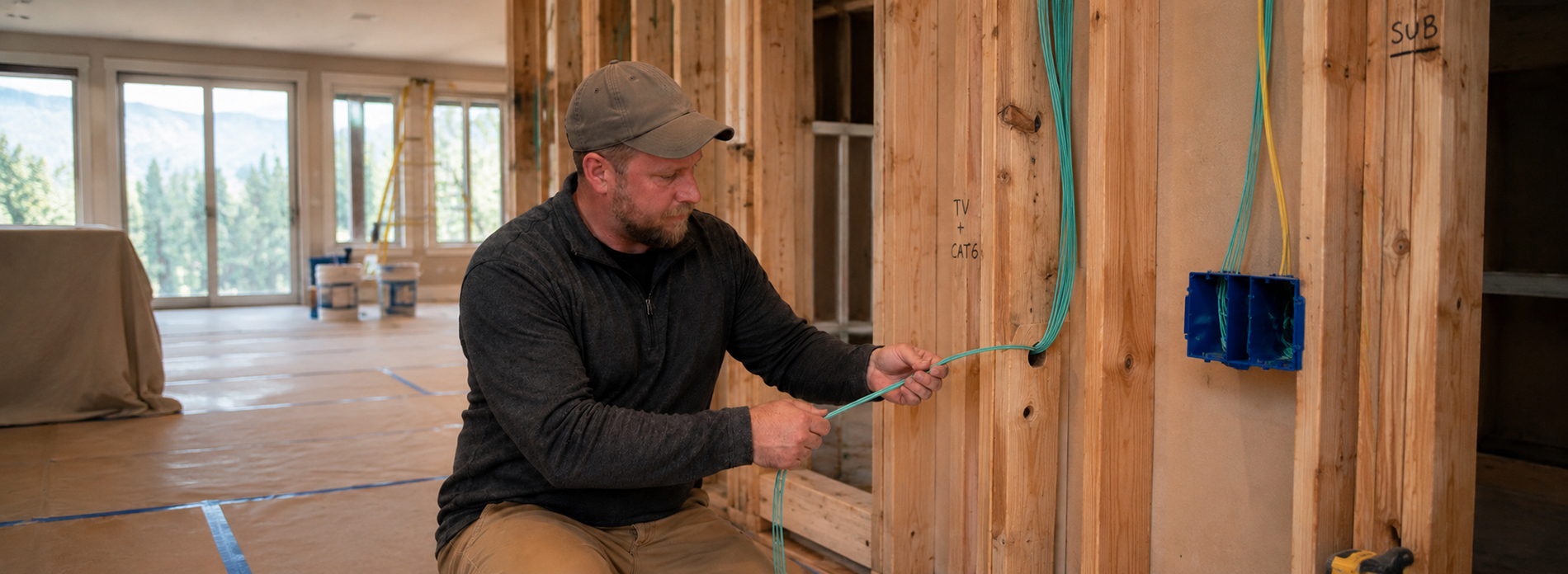
This Page Is a Good Fit If You Are...
Remodeling a Main Living Space
You want better TV placement, cleaner sound, stronger Wi-Fi, simpler lighting control, or a more refined entertainment area.
Updating an Older Home
You need modern networking, AV, security, or smart home control without making the finished result feel patched together.
Finishing a Basement or Addition
You want the new area connected properly with Wi-Fi, audio, video, lighting control, cameras, and intuitive control.
Solving Persistent Wi-Fi Problems
You have weak coverage, unreliable streaming, work-from-home demands, thick materials, multiple levels, detached spaces, or too many connected devices.
Modernizing a Media Room or Theater
You want stronger audio/video performance, better equipment placement, cleaner cabling, or a more polished entertainment setup.
Improving a Commercial Space
You need AV, displays, conference systems, networking, access control, or security coordinated during a business remodel or tenant improvement.
Smart Home Remodel Planning FAQs
When should I contact Automated Living for a remodel project?
The best time to contact Automated Living is before remodel decisions are fully locked in, especially before demolition, electrical work, cabinetry, drywall, finish selections, or media-wall details are complete. Early planning helps protect wiring paths, device locations, equipment space, and future upgrade options.
Can smart home technology be added during a remodel if the home is older?
Yes. Older homes can often be upgraded with modern networking, Wi-Fi, AV, lighting control, Control4 automation, cameras, and security. The right approach depends on the structure, existing wiring, access points, project scope, and desired finished result.
Do remodels always require opening walls for technology upgrades?
Not always. Some upgrades can be handled with limited disruption, while others benefit from open-wall or open-ceiling access during the remodel. Automated Living can evaluate the property and recommend a practical path based on performance goals and available access.
Can Automated Living work with my contractor, designer, or electrician?
Yes. Automated Living can coordinate with contractors, designers, electricians, and other trades so technology requirements are understood at the right stages of the remodel and support the finished design.
Is a remodel a good time to fix Wi-Fi problems?
Yes. Remodels are often a strong time to improve network wiring, access point placement, equipment locations, and coverage in areas with weak signal, heavy streaming demand, home office needs, thick materials, or many connected devices.
Can existing TVs, speakers, cameras, or devices be reused?
In many cases, yes. Automated Living can review existing equipment and determine what can be reused, what should be upgraded, and what should be replaced to support a more reliable and intuitive system.
Can I remodel one room now and expand the system later?
Yes. Many remodel projects begin with one main living area, media room, office, basement, addition, or outdoor space. Automated Living can plan the current upgrade while preserving options for future rooms, expanded control, additional audio zones, cameras, or broader automation.
Does Automated Living install Control4 systems in remodel projects?
Yes. Control4 is one of Automated Living’s core specialties. In remodel projects, Control4 can help unify lighting, audio, video, climate, shades, security, and other systems into a more intuitive control experience.
Do you handle commercial remodels and tenant improvements?
Yes. Automated Living supports commercial remodels and tenant improvements for offices, restaurants, hospitality spaces, medical practices, retail environments, and other businesses that need AV, networking, security, access control, displays, or automation.
What areas does Automated Living serve?
Automated Living serves Western Montana, including the Missoula Valley, Bitterroot Valley, Flathead region, and the I-90 corridor. Project locations can include Missoula, Lolo, Florence, Stevensville, Hamilton, Frenchtown, Bonner, Seeley Lake, and surrounding communities.
Make the Remodel Work Better After the Dust Settles
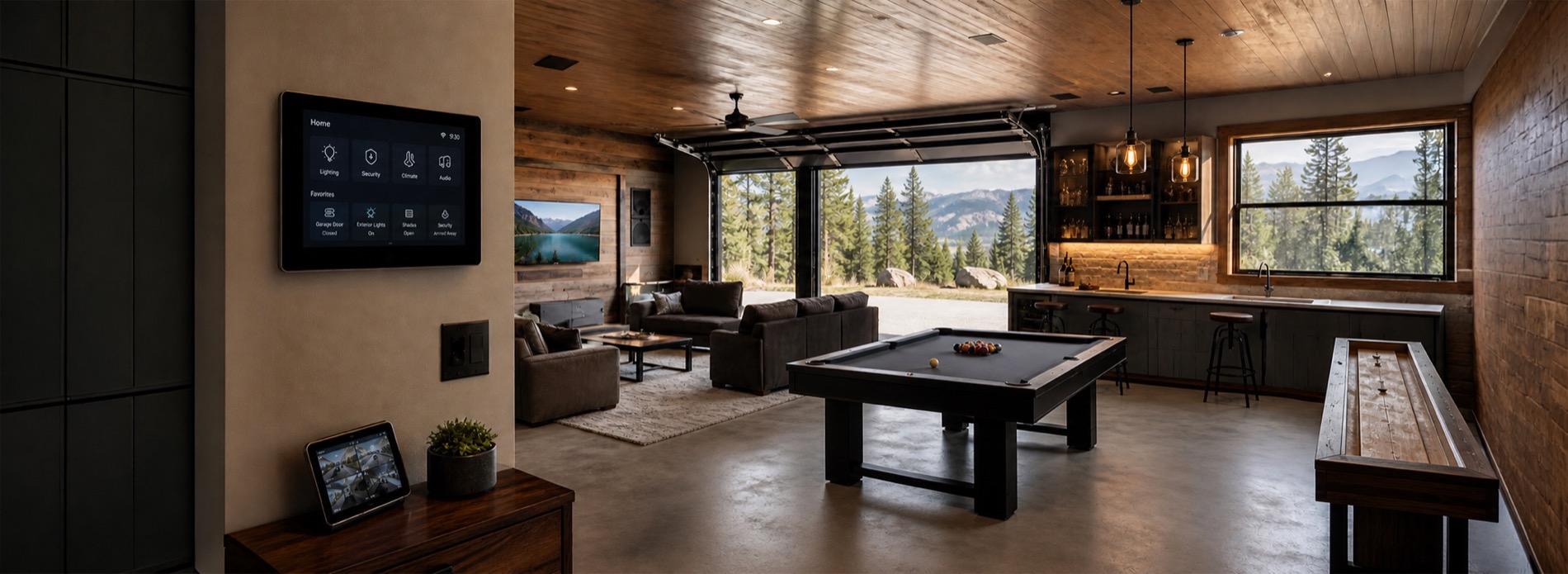
A remodel should make a property more comfortable, more useful, and easier to live or work in. The technology plan should support that outcome with reliable networking, cleaner audio/video, better security visibility, intuitive control, and systems that are serviceable over time.
Whether the project is an older home in the Missoula Valley, a second home in the Flathead region, a rural property in the Bitterroot Valley, or a commercial remodel along the I-90 corridor, Automated Living helps plan technology around the realities of the existing space.